OpenAI salary data reveals new strategic focus on AI Safety and Security
Hiring trends at OpenAI are an early indicator of where the company — and the broader AI industry — is heading next. With 451 open job listings, representing a 201% year-over-year increase, OpenAI is investing aggressively in both scale and capability expansion.
But the most valuable signal for investors lies underneath the headcount growth. Our salary allocation data reveals that OpenAI is willing to pay a premium for roles in its Security and Safety Systems teams.
Strategic Priority Areas Reflected in Compensation
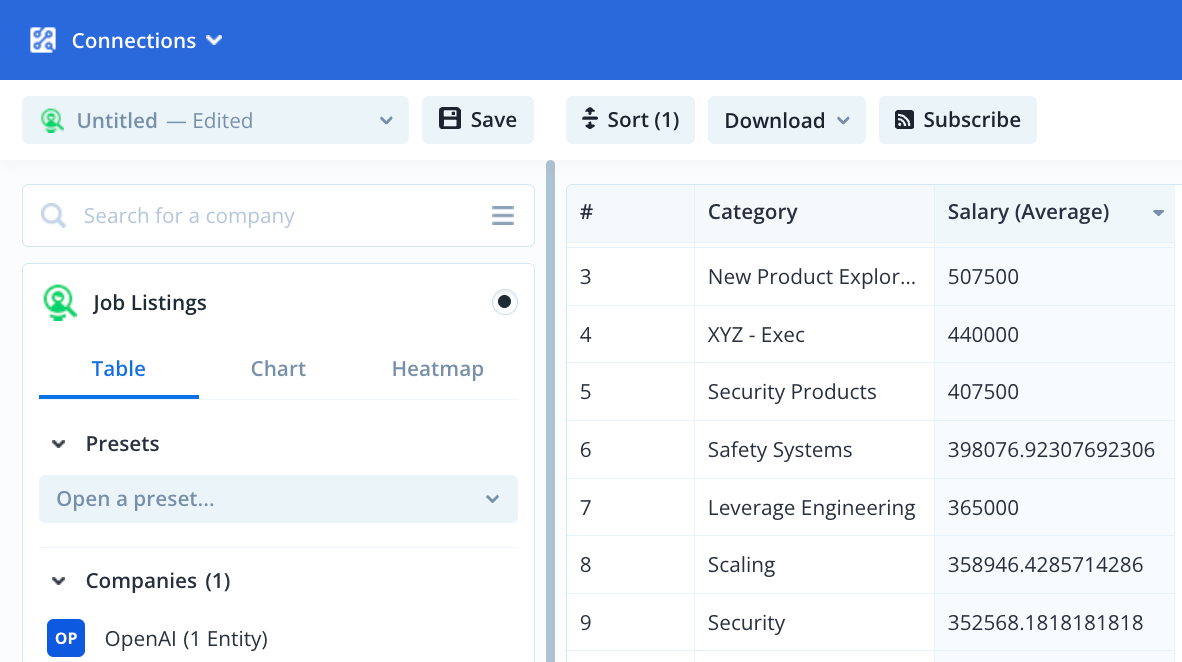
The largest hiring clusters today include:
- GTM (Go-To-Market)
- Applied AI
- Scaling
- New Product Explorations
- Security
- Safety Systems
These align with the company’s broader aim to push from foundational research into commercial scale, enterprise adoption, and responsible deployment.
However, the clearest insight comes from the compensation levels OpenAI is attaching to each function.
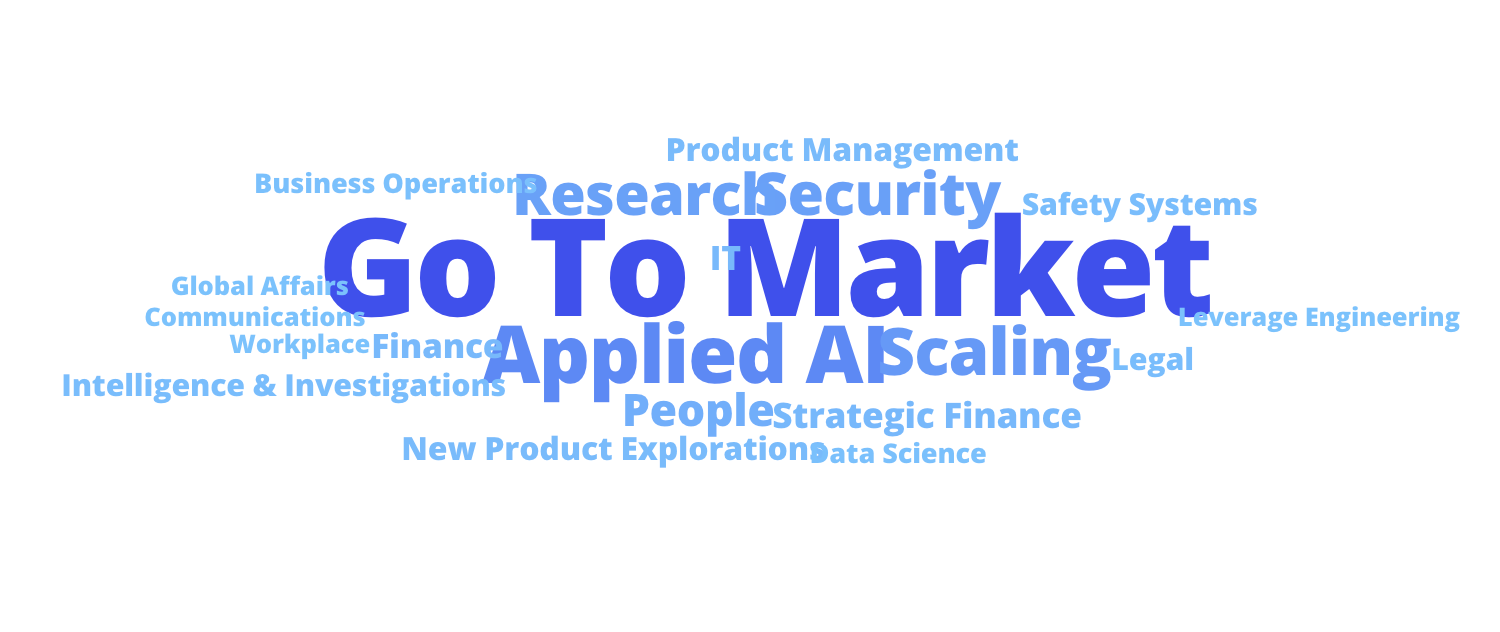
1. The Highest Salaries Are in New Product Explorations — $507,500 Avg.
This team commands the top compensation across all roles — a signal that OpenAI sees significant value creation in net-new AI-native product lines.
For investors, this suggests:
- Strong emphasis on monetizable innovations beyond existing models
- A pipeline of new categories that could shift revenue mix
- An internal understanding that product differentiation will drive future enterprise contracts and consumer-scale platforms
This is not merely research investment — it’s commercialization investment.
2. Security Roles Average $407,500 — Acknowledging Structural Risk
OpenAI’s second-highest salaries are allocated to security engineers, reflecting the escalating strategic importance of:
- Protecting model weights
- Safeguarding proprietary training data
- Preventing misuse or leakage
- Securing distributed training infrastructure
This implies the company is aggressively fortifying competitive moats and preparing for regulatory and geopolitical scrutiny around model access and cybersecurity.
3. Safety Systems Roles Average $398,077 — Cementing Trust as a Strategic Asset
Safety engineering is no longer viewed as cost center compliance — OpenAI is treating it as a value driver.
A premium salary for safety talent signals:
- Recognition that future product approvals (government, enterprise, international) will depend on demonstrable safety frameworks
- A belief that consumer and enterprise trust will become one of the most defensible differentiators
- Competition with regulatory bodies, other labs, and academia for scarce safety expertise
In the long run, companies that control safety will control market access.
Location-Based Salaries Hint at Talent Cluster Strategy
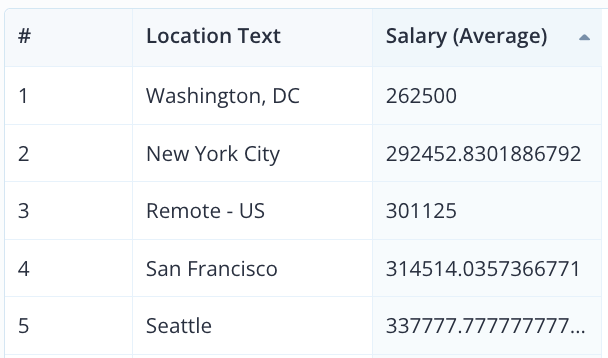
Average salaries vary meaningfully by hiring location:
- Seattle leads—$337,777 avg. A hub for cloud, systems engineering, and platform-scale expertise — positioning OpenAI close to the highest-value tech talent outside Silicon Valley.
- Washington D.C. is lowest—$262,500 avg. Reflecting a different role mix (policy, governance, federal partnerships) where compensation dynamics differ.
This indicates OpenAI’s location strategy is driven by capability concentration, not cost optimization.
What These Trends Signal to Investors
Taken together, OpenAI’s compensation structure highlights three strategic bets:
1. Significant investment in productization and new revenue streams
High salaries for exploratory product teams show an emphasis on turning foundational models into repeatable, high-margin products — not just platform APIs.
2. Security as a competitive moat
By paying a premium for security expertise, OpenAI is working to protect core assets that could define long-term dominance in a winner-take-most market.
3. Safety as a prerequisite for scale
Regulatory approval, enterprise adoption, and global deployment all hinge on safety. Compensating this talent at near-founder multiples suggests OpenAI views safety as essential to unlocking its next wave of growth.
Bottom Line
OpenAI’s hiring surge is not simply a ramp-up in operating capacity. Strategic resource allocation is an early indicator of how the company intends to win the next phase of the AI race.
And right now, OpenAI is placing its biggest chips on:
- Innovating new AI-native products
- Securing its technical and competitive infrastructure
- Building the safest, most trusted systems in the market
For investors, these moves suggest a company preparing not just to expand, but to dominate.